



Forensic audio is the application of audio technology to criminal and civil law, security, and other matters of public interest.
Phoenix Sound Studios provides forensic audio analysis, authentication, enhancement and transcription of both analogue and digital recordings. Sophisticated audio processing and analytical techniques can be applied to extract meaningful information from contaminated or compromised recordings and improve their intelligibility for transcription and forensic investigation.
Examples of forensic audio work may include the enhancement and analysis of voicemail and answering machine recordings, mobile device recordings, CCTV video, and concealed audio or video field recordings. Our services can assist with pre-trial preparation, investigative work and, where required, the preparation of material for expert witness testimony.
Phoenix Sound Studios can provide a comprehensive, detailed report documenting the work undertaken, processing techniques used and results obtained. Where appropriate, an audio/visual presentation of the findings can also be prepared for law enforcement agencies, police, legal practitioners, courts and other investigative organisations.
Confidentiality & Security
We understand the sensitive nature of forensic material. All client material is handled with strict confidentiality and appropriate security measures throughout the forensic audio process.
Authentication
Audio authentication involves examining a recording for characteristics that may indicate whether the material is consistent with a continuous recording or whether there are indications of editing, alteration or other anomalies.
The examination may involve four key areas:
1. File Analysis
Where an audio recording is supplied in a digital format, the file metadata and header information can sometimes be examined and information extracted.
Depending on the file and the information retained within it, this may help identify characteristics such as the date of creation and the software or platform used to create or process the file.
2. Critical Listening
The recording is critically evaluated for abnormal or abrupt changes in level, background noise, ambience and other audible characteristics that may indicate possible editing, tampering, anomalies or alterations.
Audio can be monitored through multiple nearfield loudspeakers in a control room that has undergone advanced room-geometry optimisation, providing an accurate and consistent listening environment.
Monitoring systems used at Phoenix Sound Studios include KRK Exposé EB8, JBL and Yamaha NS-10 monitors.
3. Frequency and Level Analysis
Specialised software can be used to measure and examine frequencies, levels and other characteristics within the audio material.
Spectrum analysis and spectral repair can be used to identify particular characteristics within a recording and, where appropriate, assist with the repair or restoration of digital audio.
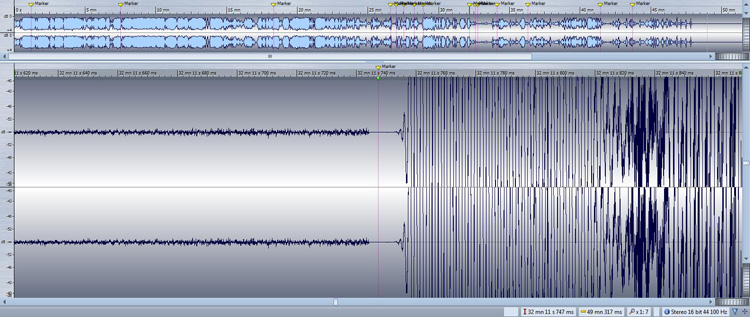
4. Visual Examination
Audio can also be examined visually to identify abnormal or abrupt changes in levels, background noise and other characteristics that may indicate possible editing, tampering, anomalies or alterations.
Visual examination can reveal characteristics that may be difficult or impossible to identify through critical listening alone.
For example, an edit point or alteration may not be readily apparent when listening to the recording, but can become evident through visual examination. A change in the noise floor, for example, may disappear momentarily, providing an indication that the recording may not be continuous and that an alteration may have occurred, whether intentionally or unintentionally.
Enhancement
Audio enhancement is the process of improving the clarity and intelligibility of an audio recording while retaining as much of the relevant original information as possible.
Different processing techniques may be used depending on the characteristics of the recording and the nature of the information being sought.
Compression and Normalisation
Compression and normalisation can be used to increase the audibility of quieter sections and manage the dynamic range of the material.
Equalisation
Equalisation can be used to cut or boost specific frequencies. This can help reduce unwanted elements within a recording and, where possible, improve the intelligibility of speech.
Filters and Spectral Repair
Specialised filters and spectral repair techniques can be used to address unwanted elements such as spikes, hum, pops and other unwanted noise.
The objective is not simply to make a recording sound louder or cleaner, but to apply appropriate processing to improve the audibility of relevant information while avoiding unnecessary alteration of the source material.
The Enhancement Process
The enhancement process generally involves:
- Identifying unwanted sounds or noise
- Reducing or removing, where possible, unwanted sounds or noise
- Assessing the result and documenting relevant observations and opinions
The degree of improvement that can be achieved depends on the quality and characteristics of the original recording. Enhancement cannot recreate information that was never captured in the original recording, but appropriate processing may make existing information more intelligible or easier to analyse.
Forensic Audio Transcription
Forensic audio transcription involves the careful and objective documentation of dialogue contained within an audio recording, generally under controlled listening conditions.
The transcription process will often take place after appropriate audio enhancement, where enhancement can improve the intelligibility of the recording.
Unlike a conventional transcription, forensic transcription may require detailed examination of difficult or unclear speech using critical listening and visual/spectral analysis. Particular attention may be given to individual syllables, speech characteristics and formant information where this assists in interpreting unclear dialogue.
Forensic transcription requires careful consideration of the available audio evidence. Where speech cannot be reliably determined from the recording, this should be distinguished from speech that can be confidently understood rather than simply making assumptions about what was said.
Forensic Audio Transcription Example

Discuss Your Forensic Audio Matter
If you have an audio recording that requires authentication, enhancement, analysis or forensic transcription, contact Phoenix Sound Studios to discuss your requirements and determine how we can assist.
All enquiries are treated with strict confidentiality.